Beyond The Passing Glance

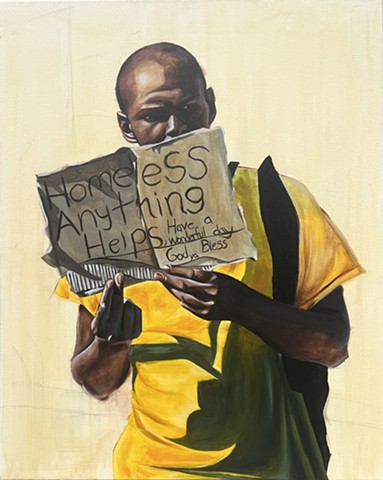
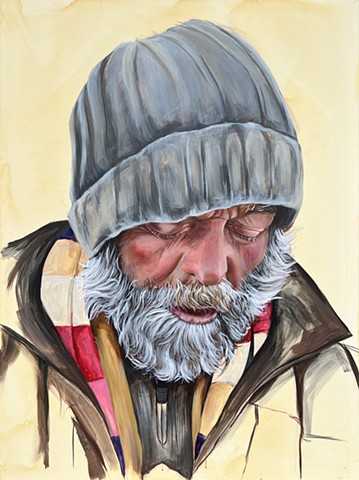
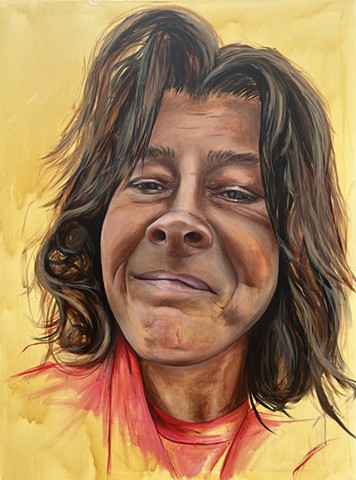
“Beyond the Passing Glance”
Portraits that invite us to stop, look deeper, and recognize the humanity we often overlook.
I grew up on a homestead in the Driftless hills of Wisconsin, away from the chaos of the world, blind to the conflicts and resolutions that take place within our society. The closest town that had more than your typical general goods store, gas station, and the only restaurant in town was about a forty minute drive from our house. And even then, it was still small enough not to fully grasp the diversity that most cities thrive with. That being said, when I would visit my grandparents in Chicago during the summers as a child, it was enough to grasp the idea that the world wasn’t all rainbows and butterflies. I remember the very first time I saw someone experiencing homelessness. I was a young girl. It was a hot summer day in the traffic of the Chicago suburbs, the air conditioning on full blast, Josh Groban playing on the CD that my grandmother always had playing. There was a man walking his way down the street in between the lines of cars. I remember being concerned that this man was walking about in traffic. I didn’t understand what he was doing until he came to the window and asked for money; my grandmother shook her head and continued to ignore him, “You don’t know where that money is going. He may just use it to buy drugs or alcohol.” is the response I received when I asked why she wouldn’t give him any. I noticed this was a common occurrence whenever I would visit the city, walking the streets of downtown. Even with holes in their soles, dirty, starving, and exhausted… Everyone ignored them. One summer, we went to visit the Art Institute of Chicago and as we waited within a mass of people to cross the street, I noticed a woman hunched over on the sidewalk. She had messy brown hair that looked as if it hadn’t been washed in weeks, her clothing, ragged brown shorts and a dirty white tank top, her skin covered in grime. As I was taking her in, staring longer than what I was told was ‘impolite’ as a child, a man rode by on a bicycle with a brown paper bag in his hand and before I could register what had happened, she was ripping it open, nearly inhaling whatever contents were inside - she was so hungry. At that moment, I had witnessed with my eyes for the first time what it was to truly suffer. I think about her sometimes and I wonder what her fate has been, where she is, whether she made it to a better situation or if her life has been only trials and tribulations. One cannot even begin to imagine what it must feel like to be in a situation where you’re exhausted just from the daily struggle of survival.
Later in life, I moved to Des Moines. The first city that I’ve ever lived in and I found myself witnessing the same behaviors. People begging on the sidewalk for change, an occasional dollar being given their way and the rest ignored, homeless shelters full, people sleeping under bypasses, police officers removing them. On more occasions than I care to admit, I too have looked the other way. It is easier in this world to ignore the things that scare us and make us uncomfortable, especially if it is something that we do not truly understand. During my last year at Iowa State University, it was required for upper class painters to develop a series. I have always gravitated toward portraiture as an artist, even as a little girl. I had thought about this project for a long time - what on earth was I to paint a series about? What gave me enough excitement to tackle this project?
And then there it was, in July of 2024, the Des Moines City Council proposed an ordinance that would affect the homeless population, removing their campsites and making it illegal for anyone experiencing homelessness to camp or sleep on public property. This ordinance had originally proposed a fine of $120 which was then lowered to $50 and now, after the bill having passed in September of 2024, a fine of $15 and a three day notice to remove belongings. This project began as a reaction to the ordinance passed in the place that I now call my home. I don’t have solutions to problems that have a multitude of underlying causes but with my project, I hope to bring attention to the issues of homelessness, to humanize those who go unseen, forcing the viewers to look at them. I wish for these portraits to pose as conversation starters, to inspire cultural and community change, to pose as a reminder that the first step towards change is awareness.